Tips for teaching 4 square piano
The A pages
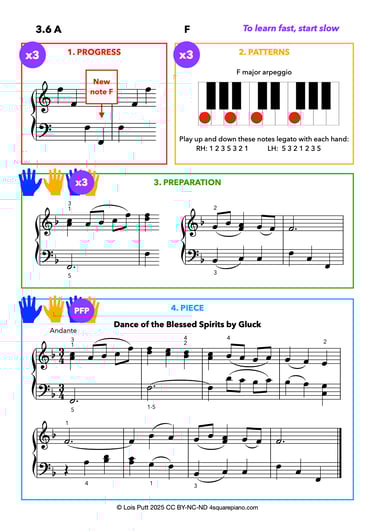
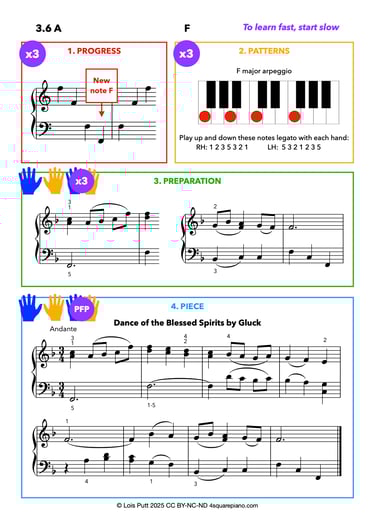
When teaching the 4 square piano method, it is important to encourage each student to follow the visual practice schedule. It may help to ask students to repeat each box 3 times in the lesson, so that this becomes normal practice before they go home. This repetition gives multiple opportunities to appreciate what went well, and to suggest improvements that might be made in the next attempt. It allows for detailed coaching in technique and musicality, and provides both a sense of quick progress, and a space for deeper challenge. The blue box contains the hardest challenge, and playing this 3 times can be time consuming, so this may require a different approach, such as working hands separately to begin with.
The B and C pages
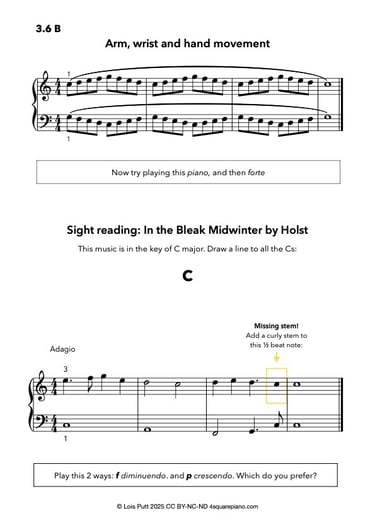
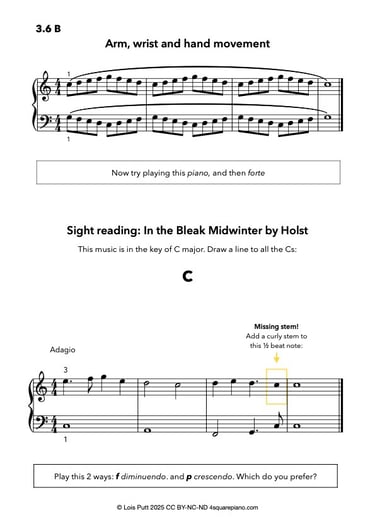
The B and C pages are designed to be used flexibly, in whatever way works best for each individual. They may be used as in-lesson activities only, or they may be sent home as extra material to learn in the week, depending on the pupil. If an A page takes 2 weeks to learn, the B or C page might be added to it in week 2. For students with a spiky learning profile, it is possible to progress through the A, B and C pages at different rates. For pupils who have learnt with other methods or teachers in the past, B and C pages from earlier levels can be used for sight reading practice, to recap skills, or to fill in any gaps in their learning. In general however, it is helpful to master each complete set before moving on.
Games and activities for faster learning
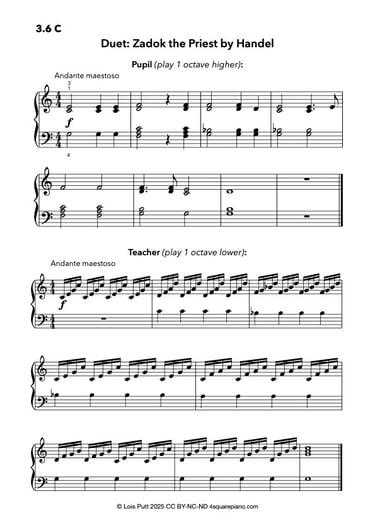
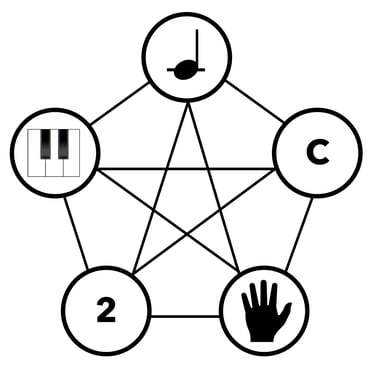
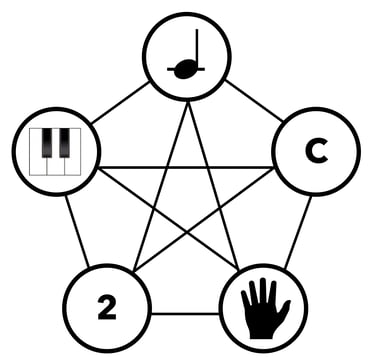
Before we play any note in a piece of piano music, our brains may have 5 concepts to synthesise: a note, a key, a letter, a number and a finger. This is a complex process! It links our muscles, our instrument, our background knowledge, and what we see on the page, all while processing rhythm, sound, emotion and more. As teachers we would like our students to be conversant in all these elements so that nothing will hold them back in their musical journey.
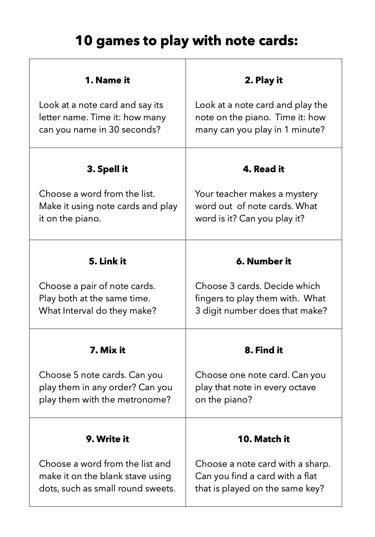
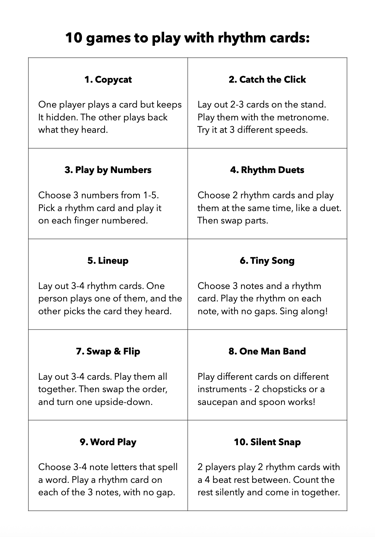
With beginners, I find it helpful to use lots of note reading games in lessons, to reinforce the connections between these 5 elements, as well as lots of rhythm games. By practicing these games, a student is building neural connections in the brain, so that eventually all the elements will flow together intuitively. allowing them to focus on the more interesting nuances of musicality. Keeping the games simple means that lesson time is used as efficiently as possible.
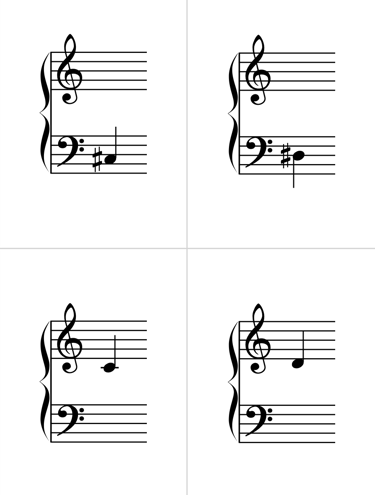
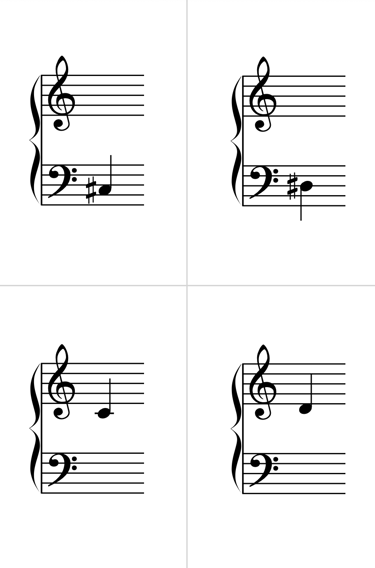
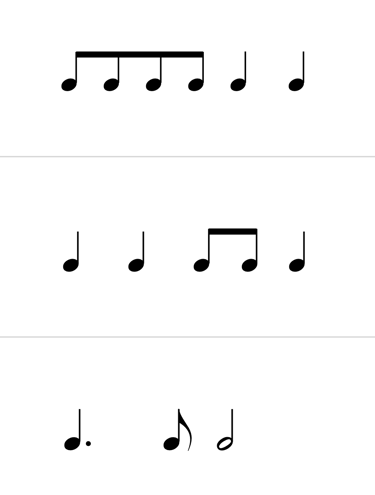
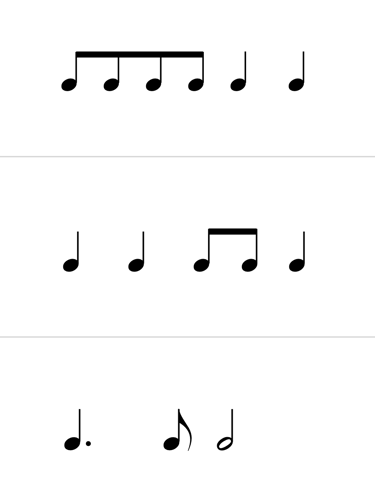
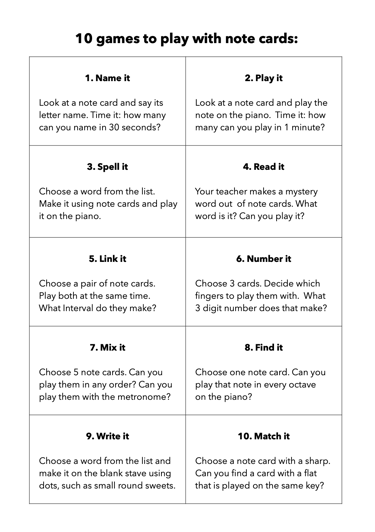
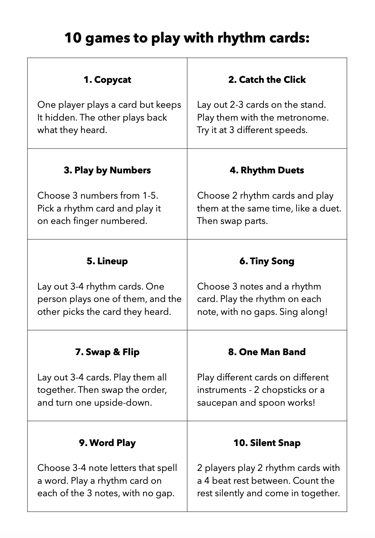
Below are a set of 10 quick and efficient games to practice note reading, and 10 quick and efficient games to practice rhythmic skills. Both pdfs contain the printable flash cards you need to play the games. Enjoy!
Note reading games
Rhythm games